
U.S. and Israel Conduct Strikes on Iran
Posted on : 28 Feb 2026 | By : Aaron Boxerman,Anushka Patil,Eric Schmitt,Erika Solomon,Farnaz Fassihi,Helene Cooper,Robert Jimison,Ronen Bergman,Samuel Granados,Steven Erlanger,Tyler Pager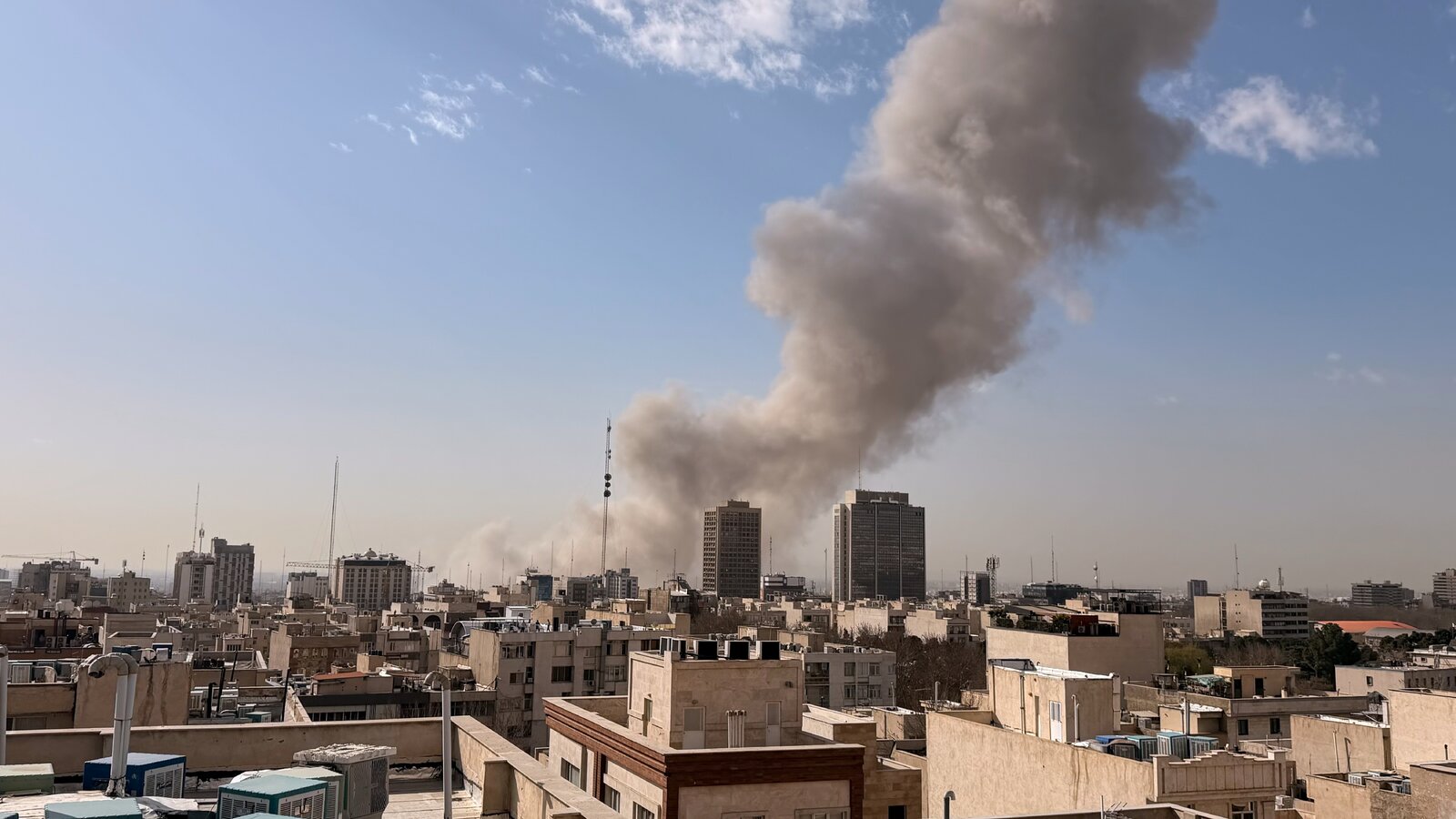
U.S. and Israel Conduct Strikes on Iran...
President Trump announced on Saturday that the United States had launched a major attack on Iran as massive explosions resounded in the Iranian capital of Tehran. Mr. Trump said in an eight-minute video on social media that the United States had begun “major combat operations” in Iran. Israel also said it was attacking Iran. The foreign minister of Oman, Badr Albusaidi, who was mediating the talks between Iran and the United States, had flown to Washington to argue that progress was being made. He said Tehran had agreed never to stockpile enriched uranium, making “the enrichment argument less relevant.” But Iran had refused to discuss other reported American demands that it give up enrichment entirely, limit the range of its ballistic missiles and end its support to its allies in the region, including Hamas, Hezbollah and the Houthis. In his taped remarks, President Trump urged the Iranian people to “take over your government” once the military action is completed. “This will be probably your only chance for generations,” he said. “For many years, you have asked for America’s help, but you never got it. No president was willing to do what I am willing to do tonight. Now you have a president who is giving you what you want, so let’s see how you respond.” The Israeli attack on Iran began at 08:10 a.m. local time, according to two Israeli senior defense officials familiar with the planning. According to the officials, the combined targets include key figures in Iran and this is an extensive attack that is expected to last at least several days. The primary threat Israel currently sees from Iran is long-range surface-to-surface missiles. According to the plan presented to President Trump, Israel will focus most of its efforts on missile storage sites, production facilities and launchers, while U.S. forces are expected to focus on the Iranian nuclear project and additional targets related to the powerful Revolutionary Guards force and the government. President Trump said that, as a result of the U.S. military operation, “We may have casualties.” Gen. Dan Caine, the chairman of the Joint Chiefs of Staff, had warned Trump in private high-level meetings that American troops could be killed or injured in a war with Iran. The strikes on Iran began just past 1 a.m. on Saturday in Washington when most members of Congress were sleeping. But Senator Jack Reed, the top Democrat on the Senate Armed Services Committee, warned in a statement on Friday before the attack began that “if war is unnecessary, it should be avoided.” He said Congress had “received no real briefings or intelligence” on a possible attack and that while Iran posed a “serious” and “destabilizing” threat to the United States and its allies, the administration had presented no “strategic justification for preemptive strikes.” President Trump, in a video posted on Truth Social, said: “Our objective is to the defend the American people by eliminating imminent threats from the Iranian regime, a vicious group of very hard, terrible people. Its menacing activities directly endanger the United States, our troops, our bases overseas and our allies throughout the world.” Hossein Kermanpour, a spokesperson for Iran’s Ministry of Health said “ambulances have been dispatched to central areas of Tehran and hospitals are on alert,” in an interview with the state news agency, IRNA. “The possible number of injured and the exact areas are yet to be announced.” As the country braces for Iranian retaliation, several Israeli hospitals say they are preparing to move patients to fortified shelters or underground shelters. Israel’s health ministry said it had ordered medical centers to discharge those who do not need immediate hospitalization. The strikes on Iran come just hours after Israel targeted what it described as launch sites and underground shafts used by Hezbollah in southern Lebanon. In recent weeks, Israel has intensified its operations against the group, including an airstrike in the Bekaa Valley last week that killed eight members, among them a commander. President Trump confirms the U.S. military has begun “major combat operations” in Iran. He posted an eight-minute-long video on Truth Social. This is the second time President Trump has attacked Iran during ongoing negotiations on its nuclear program. Already, Iranian officials were doubtful they could trust Trump to negotiate seriously or if he intended to reach a lasting agreement. Ayatollah Ali Khamenei, Iran’s supreme leader, has an abiding mistrust of the United States, which was reinforced in 2018 when Trump pulled out of the 2015 nuclear deal and reimposed harsh economic sanctions on Iran. Several Iranian news agencies are down, including the official state media outlet IRNA, which said it was hacked. Experts have warned that an attack on Iran could potentially draw the United States into a protracted conflict, because Iran’s leadership oversees extensive military abilities and a network of regional proxy forces that could help sustain a resistance. Ahead of the strikes, U.S. officials said they expected that Iran would retaliate swiftly against any attack, and likely launch missile strikes on American bases and embassies. Tehran’s proxy network of paramilitary forces is also expected to strike at American interests in the region. The reason for the sizable military build up was, in part, to protect American bases from any Iranian counterattack. The attack marks the second U.S. attack on Iran in less than a year. Last June, the U.S. bombed three nuclear sites in the country, which Trump said “completely and totally obliterated” them. The strikes also come roughly two months after the U.S. launched a military operation in Venezuela to capture its leader, Nicolas Maduro. The focus of the American strikes — at the moment — is Iran’s military apparatus, a U.S. official said. Besides its nuclear facilities, Iran is believed to have more than 2,000 missiles, primarily short- and medium-range ballistic missiles. These are scattered at launch sites across the country, U.S. military officials said. The American strikes come after a massive U.S. military buildup in the region that has included the deployment of two aircraft carriers, a number of naval destroyers and more than 50 fighter planes. Explosions have also been heard in other cities across Iran, according to the semiofficial news agency, Fars, which reported blasts in Qom, Kermanshah, Isfahan and Karaj. Iran has closed its airspace, according to the semiofficial news agency Tasnim. The Israeli military says the country will observe tightened restrictions in the wake of the Israeli attack on Iran, effective immediately, with a general closure of schools, workplaces, and public gatherings. Representative Thomas Massie, Republican of Kentucky, immediately criticized the strikes. Massie is in a group of lawmakers that intend to force votes next week to prohibit President Trump from authorizing strikes without consulting with Congress, an issue that may be considered moot by many given U.S. involvement in military action today. The strikes came after Trump grew frustrated with the negotiations over Iran’s nuclear program. Steve Witkoff and Jared Kushner, his envoys, met with Iranian officials in Geneva on Thursday but Trump said on Friday that he was “not happy” with the talks. Trump had said Friday morning that he had not made a decision about whether to launch military action and that he would “love not to use force” but that “sometimes you have to.” The latest U.S. military strikes on Iran came roughly eight months after American forces bombed three Iranian nuclear facilities, attacks that directly involved the United States in Israel’s 12-day war on Tehran. Those June attacks came after President Trump — who campaigned against American interventionism and has billed himself as a peacemaker — lost patience with diplomatic efforts and shifted his position on Iran under pressure from Israel. Dozens of U.S. strikes are being carried out by attack planes based at bases around the Middle East and from one or more aircraft carriers, a U.S. official said.