
Artemis II splashes down on Earth after 10-day moon flight
Posted on : 11 Apr 2026 | By : The Entity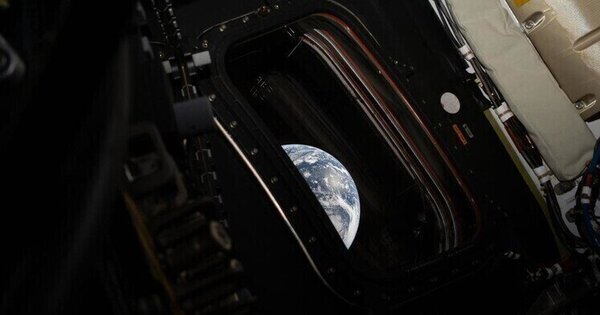
Artemis II splashes down on Earth after 10-day moon flight...
Vance leaves for Pakistan as US, Iran prepare for ceasefire talks Rights group demands U.S. action after Beirut strikes Woman who sold Matthew Perry ketamine sentenced to 15 years in jail Bondi to give House deposition next week in Epstein probe a miss Artemis II splashes down on Earth after 10-day moon flight Four astronauts return from humanitys first voyage around the Moon in more than 50 years NASA's Artemis II astronauts have safely returned to Earth, splashing down in the Pacific Ocean off the coast of Southern California and closing out humanity's first crewed journey around the Moon in more than half a century. The mission marks NASA's first crewed Artemis flight and the first time people had traveled beyond low Earth orbit since Apollo 17 in 1972. Aboard the Orion spacecraft are Commander Reid Wiseman, Pilot Victor Glover, Mission Specialist Christina Koch, and Canadian Space Agency astronaut Jeremy Hansen. Launched from Kennedy Space Center in Florida on April 1, the four-person crew spent about 10 days testing the spacecraft and its systems on a lunar flyby designed to help pave the way for future missions deeper into the Artemis program. width="560" height="315" src="//www.youtube.com/embed/nfhDuOHMp0A" frameborder="0"> During the mission, Artemis II set a new distance record for human spaceflight, with NASA saying the crew surpassed the mark set by Apollo 13. The astronauts also carried out a high-profile flyby of the Moon's far side and captured dramatic images of the Moon and Earth during the return leg. The final descent was among the most critical phases of the flight. Orion hit Earth's atmosphere at hypersonic speed, endured extreme heating during reentry, then slowed under parachutes before splashing down. NASA and US Navy recovery teams were positioned to retrieve the spacecraft and crew after landing. Artemis II did not land on the Moon, but NASA has described it as a crucial test of the systems needed to send astronauts farther into deep space and eventually back to the lunar surface. Like most test flights, Artemis II was not entirely trouble-free. Early in the mission, the crew and flight controllers had to troubleshoot Orion's toilet after a fault light appeared, and later dealt with additional hygiene-system issues, including a urine-venting problem and an odd burning smell near the toilet bay. NASA said the glitches were manageable and did not threaten the mission. The mission's results are expected to shape the next steps in the Artemis campaign, including future crewed lunar operations. Artemis II splashes down on Earth after 10-day moon flight Artemis II splashes down on Earth after 10-day moon flight 11th April 2026, 10:01 GMT+11 Four astronauts return from humanitys first voyage around the Moon in more than 50 years NASA's Artemis II astronauts have safely returned to Earth, splashing down in the Pacific Ocean off the coast of Southern California and closing out humanity's first crewed journey around the Moon in more than half a century. The mission marks NASA's first crewed Artemis flight and the first time people had traveled beyond low Earth orbit since Apollo 17 in 1972. Aboard the Orion spacecraft are Commander Reid Wiseman, Pilot Victor Glover, Mission Specialist Christina Koch, and Canadian Space Agency astronaut Jeremy Hansen. Launched from Kennedy Space Center in Florida on April 1, the four-person crew spent about 10 days testing the spacecraft and its systems on a lunar flyby designed to help pave the way for future missions deeper into the Artemis program. width="560" height="315" src="//www.youtube.com/embed/nfhDuOHMp0A" frameborder="0"> During the mission, Artemis II set a new distance record for human spaceflight, with NASA saying the crew surpassed the mark set by Apollo 13. The astronauts also carried out a high-profile flyby of the Moon's far side and captured dramatic images of the Moon and Earth during the return leg. The final descent was among the most critical phases of the flight. Orion hit Earth's atmosphere at hypersonic speed, endured extreme heating during reentry, then slowed under parachutes before splashing down. NASA and US Navy recovery teams were positioned to retrieve the spacecraft and crew after landing. Artemis II did not land on the Moon, but NASA has described it as a crucial test of the systems needed to send astronauts farther into deep space and eventually back to the lunar surface. Like most test flights, Artemis II was not entirely trouble-free. Early in the mission, the crew and flight controllers had to troubleshoot Orion's toilet after a fault light appeared, and later dealt with additional hygiene-system issues, including a urine-venting problem and an odd burning smell near the toilet bay. NASA said the glitches were manageable and did not threaten the mission. The mission's results are expected to shape the next steps in the Artemis campaign, including future crewed lunar operations. Read This Next Techs lift Nasdaq 80 points Friday, Dow Jones dives Pentagon split with Anthropic boosts smaller AI firms Amazon to offer Lilly weight-loss pill via kiosks, same-day Tesla plans smaller, cheaper EV as strategy questions grow Dow Jones advances 276 points as traders pin hopes on Iran truce Big News Network Big News Network News Agency Midwest Radio Network Mainstream Media BIG NEWS NETWORK.COM Contact & Support Terms & Conditions PRODUCTS & SERVICES News Releases Copyright © 1998-2025 Big News Network All rights reserved. ISSN: 2616-6917